Quezon City is not one single property market. It is a large, highly urbanized city containing established business districts, major universities, government institutions, transport hubs, mature residential neighborhoods and areas still undergoing major infrastructure and commercial development.
For anyone studying Quezon City property investment, that diversity is important. A condominium in Araneta City serves a different market from a property near UP Diliman or Katipunan. An office building in Triangle Park faces different market conditions from a neighborhood commercial property in Novaliches.
This Quezon City Investment Guide looks at the city’s fundamentals, major investment locations, infrastructure, residential and office markets, and the factors that should be considered before buying. It is written for investors who want a clear view of Quezon City real estate in 2026, and it is particularly relevant to those considering Araneta City property investment in Cubao, one of the city’s most established mixed-use and transportation hubs.
Table of Contents
Why Quezon City Real Estate Remains Important to Property Investors
Quezon City was established as a planned urban center in the late 1930s under the administration of President Manuel L. Quezon. The city’s planning history distinguishes it from many organically developed urban areas in Metro Manila. The National Commission for Culture and the Arts describes Quezon City’s establishment and planning as beginning in the late 1930s, with its urban layout influenced by established Philippine planning traditions.
It subsequently served as the national capital for 27 years. Today, it is one of the Philippines’ largest urban markets.
The Philippine Statistics Authority‘s 2024 Population Census places Quezon City’s population at 3,084,270, making it the most populous city in the National Capital Region.
The city’s own 2023–2024 annual report gives its land area as approximately 161.1 square kilometers, with six congressional districts and 142 barangays. The same report identifies 355 developed parks and open spaces, 47.77 square kilometers of green space and 34 IT parks and centers.
There is a technical difference in published land-area figures: the PSA’s population-density table uses 171.71 sq. km. for Quezon City based on the applicable land-area reference. For property research, the important point is to identify the source and methodology rather than mix figures from different datasets.
These fundamentals explain why Quezon City investment opportunities keep attracting attention, but they are only the starting point for any Quezon City property investment decision.
Best Areas to Invest in Quezon City: The Main Property Markets
Because QC covers a very large area, location selection is more important than simply choosing “Quezon City.” This part of the Quezon City Investment Guide breaks the city into submarkets, because the question of which area in Quezon City is best for condo investment depends on the tenant market a property is meant to serve. The best areas to invest in Quezon City are best understood one submarket at a time.
Araneta City and Cubao
Araneta City is arguably the most established investment-oriented location in this guide, and it is the natural starting point for Araneta City property investment.
Its strengths are its combination of transportation, retail, offices, entertainment, hotels and residential properties. Araneta City is served by both the MRT-3 Araneta Center–Cubao Station and LRT-2 Araneta Center–Cubao Station, connected to the complex through elevated pedestrian facilities. It also has a bus station, UV Express, jeepneys, e-shuttles and taxi services.
For investors, this creates several potential tenant markets: employees, students, families, commuters and short- to medium-term residents who prioritize accessibility. That breadth is why Cubao is often considered a good property investment for transport-driven demand, and why Araneta City can be good for rental investment, provided the specific unit is priced against real comparable rents.
Triangle Park and North Quezon City
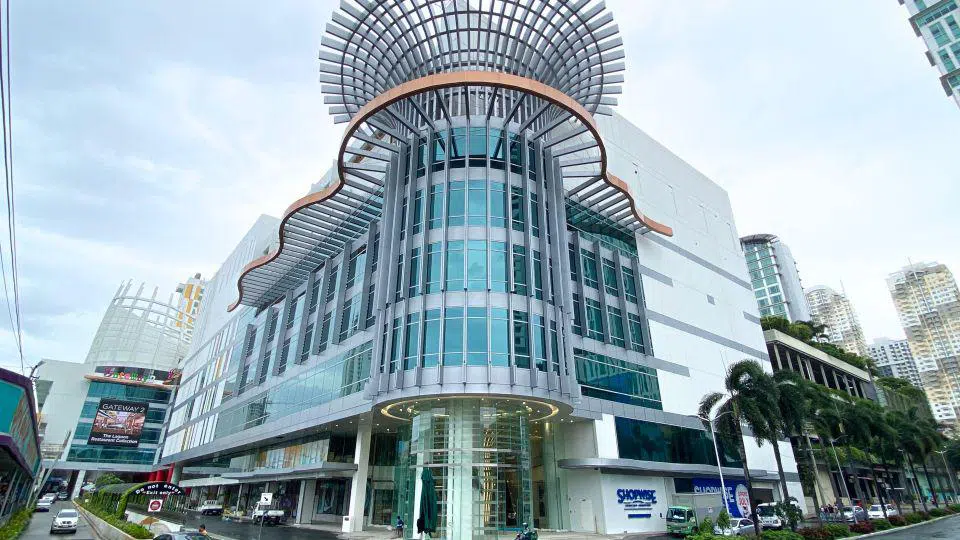
Triangle Park, also known as the Quezon City Central Business District, covers approximately 250 hectares. Executive Order No. 620 identified the East and North Triangles and the Veterans Memorial area as a major integrated mixed-use development opportunity.
Today, the broader area includes major commercial and institutional destinations such as TriNoma, Vertis North, government offices, hospitals and the surrounding university and research ecosystem.
Diliman and UP
University of the Philippines Diliman is one of the city’s most important institutional anchors.
The broader Diliman area benefits from the concentration of universities, government agencies, research institutions, hospitals, offices and established residential communities.
For property investors, these institutional anchors can support demand from students, faculty, professionals, researchers and employees. However, proximity to a university does not automatically guarantee high rental returns; unit size, walking accessibility, competition and actual tenant demand still have to be tested.
Katipunan and Loyola Heights
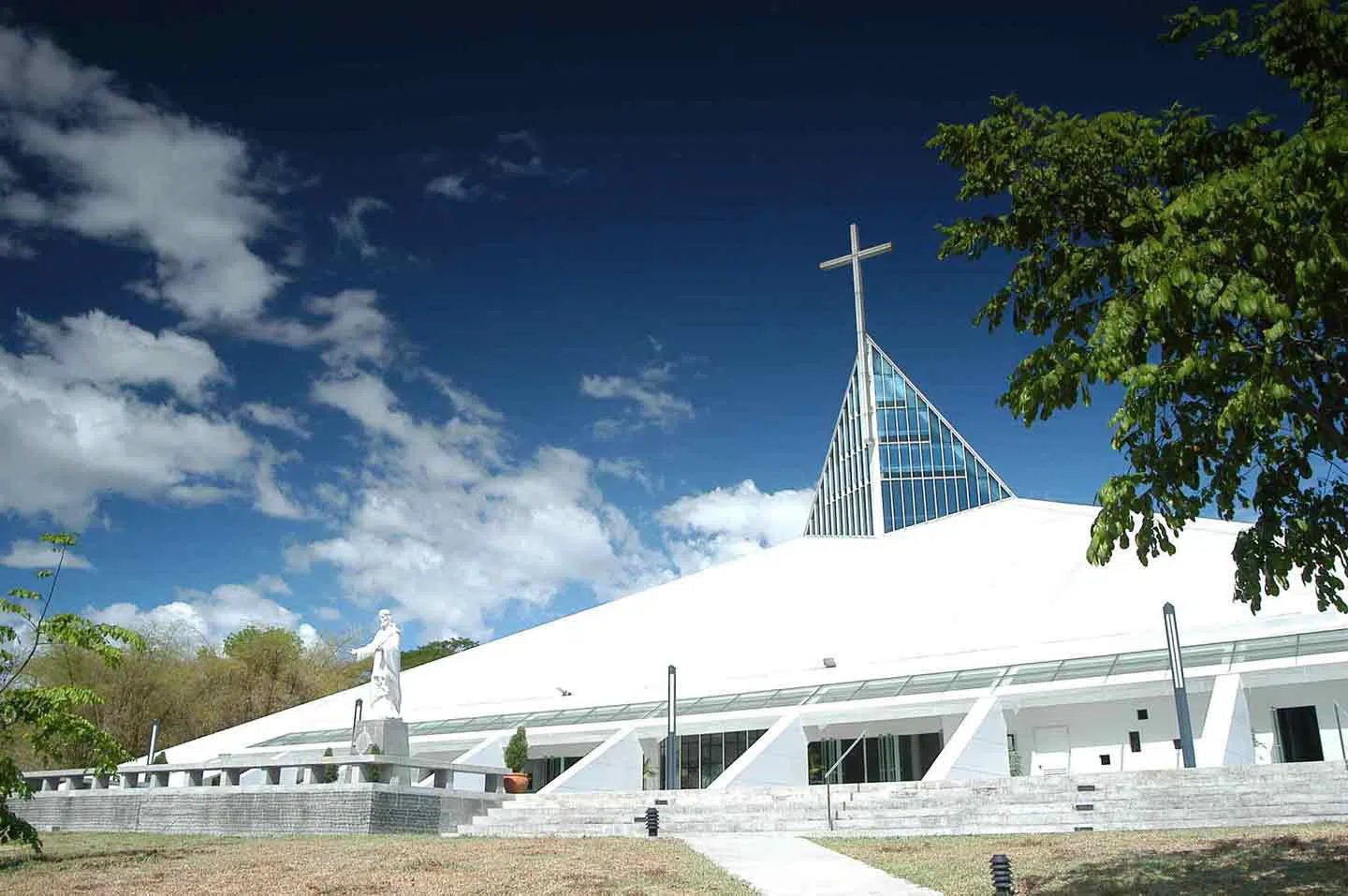
Katipunan is particularly relevant to education-oriented residential demand because it is surrounded by major institutions including Ateneo de Manila University and Miriam College, with UP Diliman also nearby.
The area has attracted increasing attention from residential developers and investors looking at student and young-professional housing. For student-oriented Quezon City condo investment, it is one of the best areas to buy a condo in Quezon City to study closely. Colliers has specifically identified Quezon City and the Katipunan area as locations worth considering as developers search for well-connected fringe markets.
New Manila and Surrounding Central QC
New Manila, Gilmore, Tomas Morato, Timog and nearby neighborhoods combine established residential communities with restaurants, offices, schools, hospitals and entertainment.
These areas can appeal to investors who prefer mature neighborhoods rather than large master-planned developments.
Eastwood
Eastwood City is another major employment and mixed-use center within Quezon City. Its combination of offices, residential towers, restaurants and retail gives it a different investment profile from Cubao.
The important lesson is that the Quezon City real estate market should be analyzed by submarket rather than by citywide averages alone.
Triangle Park: One of QC’s Major Development Stories
Triangle Park’s approximately 250-hectare area was formally positioned as a large-scale, integrated and environmentally balanced mixed-use development under Executive Order No. 620. The project was intended to combine transportation, commercial, residential and institutional functions.
Today, the area provides access to major destinations including:
- TriNoma
- Vertis North
- Quezon Memorial Circle
- Veterans Memorial Medical Center
- government offices
- hospitals
- offices
- restaurants and retail
- surrounding residential developments
The location also sits within the wider education and research ecosystem of Diliman.
Nearby institutions include UP Diliman, Ateneo de Manila University, Miriam College and the Philippine Science High School. These institutions are not all physically inside Triangle Park itself, so they should be viewed as part of the broader Quezon City education and institutional catchment, not as components of the CBD.
For property investment in Quezon City, this distinction matters. A condominium’s rental market may be influenced by several nearby demand sources rather than one single institution.
Infrastructure: What Infrastructure Projects Will Affect Quezon City Property Values?
Infrastructure is one of the most important long-term variables in Quezon City property investment.
QC connects major Metro Manila corridors through EDSA, Commonwealth Avenue, Quezon Avenue, Aurora Boulevard, C-5, Mindanao Avenue and other arterial roads.
It is also positioned between major northern and southern transport corridors. From Cubao, buses connect to numerous destinations in Central and Northern Luzon, while EDSA and other metropolitan roads provide connections toward Makati, Pasay, Taguig and the southern part of Metro Manila.
Rail connectivity is particularly important in Araneta City. The MRT-3 and LRT-2 provide two rail lines serving the same major commercial district.
Future and ongoing transport investment is another factor to monitor. The Metro Manila Subway has active construction activity in Quezon City, including the Tandang Sora station area. The Quezon City government issued traffic advisories in 2026 relating to construction activity for the subway project.
The city also operates eight Q City Bus routes, including routes connecting QC Hall with Cubao, Litex/IBP Road, Aurora–Katipunan, General Luis, Mindanao Avenue, Gilmore, C5/Ortigas Avenue Extension and Muñoz.
For investors, the principle is straightforward: transport infrastructure does not automatically create capital appreciation, but properties with practical access to employment, education and transportation have a stronger underlying demand case in the Quezon City property market.
Healthcare, Education, Parks and Lifestyle Infrastructure
Quezon City’s size gives residents access to a substantial institutional network.
The city’s government directory lists three local-government hospitals and two national-government hospitals, including Quezon City General Hospital, Novaliches District Hospital, Rosario Maclang Bautista General Hospital, National Children’s Hospital and the Philippine Orthopedic Center.
The city also reported 66 health centers in 2025, while its health system includes Super Health Centers that can provide services such as laboratory, dental and lying-in facilities.
Education is another major demand driver. The city reported more than 443,000 students enrolled in its public elementary and secondary schools during School Year 2023–2024.
The city also has a substantial private education sector, universities and specialized schools.
Green space is another differentiating factor. Quezon City’s annual report identifies 355 developed parks and open spaces and 47.77 square kilometers of green space.
The 27-hectare Quezon Memorial Circle remains one of the city’s most recognizable public spaces and is undergoing redevelopment intended to improve green space, recreation and economic activity.
The city government also maintains an extensive park system, including neighborhood parks, sports areas and recreational facilities.
Quezon City Real Estate Market 2026: What Is Happening Now?
What is the property market like in Quezon City? The current Quezon City property market requires more caution than simply assuming that Metro Manila property prices will rise every year.
Colliers reported that Metro Manila’s residential market showed early signs of recovery in Q1 2026. Preselling take-up increased sharply, while remaining condominium inventory life fell to 6.8 years from a peak of 13.4 years in mid-2025. However, Colliers still projects Metro Manila residential vacancy could reach 25.6% by the end of 2026, with rents broadly flat.
Quezon City is one of the locations that needs particularly careful supply analysis. Colliers has identified Cubao–New Manila and Quezon City among areas with substantial unsold RFO inventory.
That sounds negative, but it can also create opportunities for buyers of condos for investment in Quezon City. A buyer of an RFO property may have more negotiating leverage when several comparable units are available. Developers may compete through discounts, extended payment terms, rent-to-own structures or other incentives.
How Much Condominium Supply Is in Quezon City?
There is no single government dataset that functions as a continuously updated “Quezon City condo inventory” database.
However, Arcadis’ 2026 Philippines Construction Cost Handbook estimates approximately 580,000 completed residential condominium units across Metro Manila at the end of 2025, with Quezon City accounting for about 20% of the total. That implies roughly 116,000 units, although this is a derived estimate rather than an official citywide unit count.
This is why investors should avoid using a single “average QC condo price” as the basis for a Quezon City condo investment decision. Tower age, location, developer, floor area, parking, view, association dues, amenities and rental competition can produce very different investment outcomes.
Is Quezon City Good for Rental Income?
Current public research provides stronger Metro Manila-wide benchmarks than QC-specific rental averages, so the answer depends on the building and unit.
Arcadis reported 2025 monthly rents for mid-end and luxury condominiums across Metro Manila in the range of approximately ₱600–₱1,200 per square meter, while noting higher ranges in Makati CBD and BGC. This should be treated as a metropolitan benchmark, not a Quezon City rental quote.
Colliers’ Q1 2026 assessment is more conservative: condominium lease rates are expected to remain largely flat in 2026 while elevated supply and financing conditions continue to affect the market.
For an investor, actual comparable rentals in the specific building are much more useful than a citywide average.
Office Property in Quezon City
Quezon City is also an important office market.
Colliers reported that Quezon City was among the locations accounting for a significant share of Metro Manila office transactions in 2025. Its Q4 2025 report also identified QC as one of the areas delivering substantial upcoming office supply.
A Colliers survey found that 13% of respondents selected Quezon City as a preferred location for office expansion outside Makati CBD, while the firm expects QC to deliver approximately 44,000 square meters of new office supply annually from 2026 to 2028.
That new supply is both an opportunity and a risk. More modern office buildings can attract tenants, support surrounding retail and increase demand for nearby residential properties. At the same time, large amounts of new office stock can increase competition among landlords.
This is particularly relevant for investors evaluating older commercial buildings, and it shows that Quezon City investment opportunities in commercial real estate carry their own supply risks.
Megaworld Properties in Araneta City
For investors focused on Araneta City property investment, Megaworld’s residential presence in Manhattan Garden City is particularly relevant.
Megaworld Corporation has developed several residential projects in the Araneta City area, including:
- Manhattan Heights
- Manhattan Plaza
- Manhattan Parkway
- Manhattan Parkview
- Laurent Park
Megaworld’s current project information identifies Manhattan Plaza as an RFO development with 597 units in Manhattan Garden City.
Manhattan Heights consists of four towers and is located along General Romulo Avenue, with access toward Aurora Boulevard and EDSA through P. Tuazon Boulevard. Megaworld lists 1,600 units for the project.
Laurent Park is a newer project in Manhattan Garden City. Megaworld lists 39 floors and 796 units, with a stated turnover date of August 31, 2028 plus a six-month grace period.
The investment case here is not simply the developer. It is the combination of Araneta City + transportation + employment + retail + entertainment + residential density + established neighborhood demand.
For an investor comparing towers, however, the right question is not “Which Megaworld condo is best?” It is: which unit has the best relationship between acquisition cost, realistic rent, vacancy risk, association dues, financing cost and resale liquidity?
Is Quezon City a Good Place to Invest in Property?
Yes, but the answer depends heavily on the location and investment objective.
Quezon City real estate has several characteristics that support long-term property demand:
- More than three million residents based on the latest census.
- A very large land area and diverse neighborhoods.
- Major universities and educational institutions.
- Government and institutional employment centers.
- Major hospitals.
- Multiple business districts.
- Extensive road and rail connectivity.
- Large retail and entertainment destinations.
- A substantial existing condominium market.
- Continuing infrastructure investment.
But QC also has risks.
The most important residential risk in 2026 is supply. Investors should not assume that a property will automatically appreciate simply because it is in Quezon City. A building surrounded by competing units may experience longer vacancy periods and slower rent growth.
Flood exposure is another issue that must be evaluated at the property level for any Quezon City property investment. The city itself identifies flood-prone areas, and its 2026 advisories show that flooding remains a real consideration in some barangays.
How to Evaluate a Quezon City Property Investment
Before buying, work through five numbers. This Quezon City Investment Guide recommends running them for every unit you consider.
1. Acquisition cost
Calculate the actual all-in cost rather than relying only on the advertised selling price. Include:
- Purchase price
- Taxes and government charges where applicable
- Registration expenses
- Documentation costs
- Parking
- Renovation
- Financing costs
- Association dues
- Initial leasing expenses
2. Realistic rent
Use actual comparable listings and, preferably, evidence of recently achieved rents. Do not calculate yield using the highest rental listing you can find.
3. Vacancy
A ₱30,000 monthly rent does not mean ₱360,000 annual income if the property sits vacant for several months. Model conservative vacancy.
4. Net operating income
Subtract recurring expenses such as association dues, property management, maintenance, repairs, taxes and realistic vacancy. Only then calculate your rental yield.
5. Exit value
Ask who will buy the unit from you five or ten years from now. A property with good rental demand but weak resale liquidity can produce a very different investment outcome from a property that appeals to both tenants and owner-occupiers.
Quezon City Investment Opportunities by Investor Objective
Matching property investment in Quezon City to the right submarket starts with the investor’s goal:
| Investor objective | Areas worth studying |
|---|---|
| Transport-oriented rental | Araneta City / Cubao |
| Student-oriented rental | Katipunan / Loyola Heights / Diliman |
| CBD and office demand | Triangle Park / North Avenue |
| Established residential market | New Manila / Central QC |
| Live-work-play environment | Araneta City / Eastwood |
| Long-term land and redevelopment | Selected growth corridors |
| Family-oriented living | Diliman and established residential neighborhoods |
This is not a ranking of guaranteed returns. It is a starting point for matching a property with its likely demand base.
Quezon City Investment Guide FAQ
Which area in Quezon City is best for condo investment?
It depends on your target tenant. Araneta City and Cubao suit transport-oriented renters, Katipunan and Diliman suit student demand, and Triangle Park suits office-linked demand. For Quezon City condo investment, test actual rents and competing supply in the specific building before choosing.
What are the best areas to buy a condo in Quezon City?
Araneta City/Cubao, Katipunan, Diliman, Triangle Park, New Manila and Eastwood are the main submarkets covered in this guide. Each serves a different demand base, so compare condos for investment in Quezon City by tenant type, not by area name alone.
Is Cubao a good property investment?
Cubao has one of the strongest accessibility cases in the city, with MRT-3, LRT-2, buses, jeepneys and UV Express. The caution is supply: Colliers has flagged substantial unsold RFO inventory in Cubao–New Manila, which affects pricing, vacancy and rent growth.
Is Araneta City good for rental investment?
Araneta City draws employees, students, families and commuters, which supports rental demand. Araneta City property investment still depends on the unit’s price, realistic rent, vacancy, association dues and resale liquidity.
What is the Quezon City real estate market 2026 outlook?
Metro Manila showed early recovery signs in Q1 2026, but Colliers projects residential vacancy could reach 25.6% by the end of 2026, with rents broadly flat. The Quezon City property market therefore favors selective, well-priced purchases over broad assumptions of appreciation.
The Bottom Line for Quezon City Investors
The strongest argument for Quezon City real estate is not a promise of appreciation. It is the city’s depth of economic and institutional activity.
The city combines population, universities, employment centers, healthcare, transportation, retail, entertainment and major infrastructure. Araneta City demonstrates this particularly well: it is not dependent on a single tenant group or single infrastructure project.
At the same time, 2026 is not a market in which investors should buy purely on location branding.
The better strategy is to identify the specific demand that will pay the rent, determine how much competing supply exists, calculate the true net yield and then assess whether the acquisition price leaves sufficient room for risk.
For investors using this Quezon City Investment Guide to evaluate Araneta City property investment, Cubao or another Quezon City submarket, the most useful next step is not simply asking “Is QC a good investment?”
It is asking: “Which property, at what price, serving which tenant market, produces the best risk-adjusted return?”
If you’re evaluating a condo, commercial property, or investment opportunity in Araneta City, Cubao, or another Quezon City location, I can help you compare the property’s location, price, rental potential, competing supply and overall investment case.
For property inquiries and investment consultation: 0917 899 2486 or fill-out our inquiry form below.