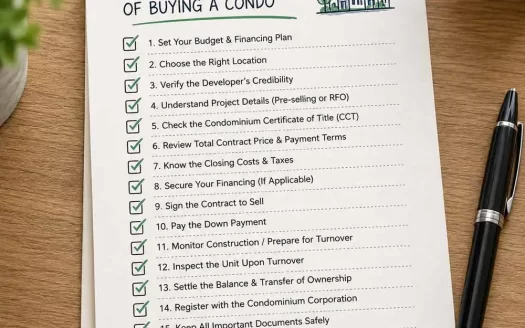
Buying a Condo in Quezon City: 8 Smart Moves Before You Sign
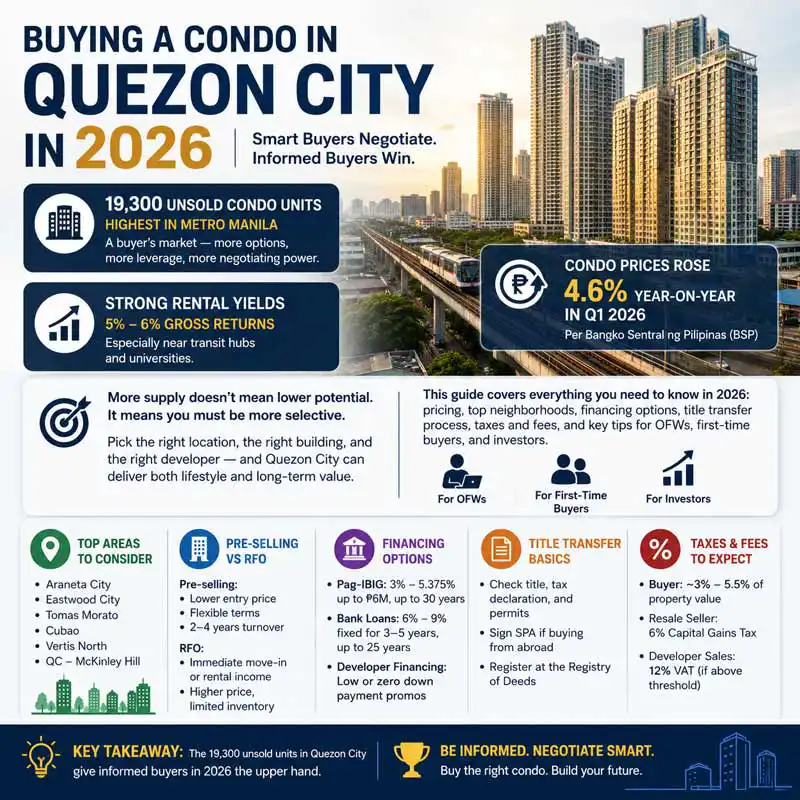
Buying a condo in Quezon City in 2026 means entering Metro Manila’s most oversupplied submarket, with about 19,300 unsold units, but also one of its better-yielding ones, with gross rental returns of 5% to 6% near transit hubs and universities. Nationwide condo prices rose 4.6% year-on-year in Q1 2026, per BSP.
Table of Contents
Quezon City carries roughly 19,300 unsold condo units, more than any other district in Metro Manila, and that single number changes how you should approach buying a condo in Quezon City in 2026. It’s not a reason to walk away. It’s a reason to negotiate harder, pick the right building, and understand exactly what you’re buying before you sign a reservation agreement. This guide breaks down the current pricing, the neighborhoods worth shortlisting, the actual mechanics of financing and title transfer, and the tax bill nobody mentions until after the reservation fee is paid. Whether you’re an OFW planning a remote purchase, a first-time buyer, or an investor chasing yield, here’s what the 2026 numbers actually say
Quezon City Condo Market Data & Numbers (2026)
Nationwide, the Bangko Sentral ng Pilipinas‘ Residential Property Price Index climbed 4.5% year-on-year in the first quarter of 2026, with condominium prices specifically rising 4.6% — the fastest pace in more than a year. Inside the National Capital Region, quarter-on-quarter condo prices jumped 13.2%, driven by developer promos and flexible payment terms on ready-for-occupancy stock. The nationwide median condo price hit ₱4.72 million in Q1 2026, versus a ₱3.39 million median for houses; inside the NCR specifically, that median condo price climbs to ₱5.32 million.
Vacancy tells a more cautious story. Colliers Philippines projects Metro Manila residential vacancy will peak at 25.6% by the end of 2026, up from 24.7% in 2025, as close to 13,000 new condo units are turned over citywide. Quezon City is the single biggest contributor to that number, carrying an estimated 19,300 unsold units as of 2025 — more than Makati and Bonifacio Global City combined. That’s the defining fact of the Metro Manila condo market 2026: this isn’t a shortage, it’s a buyer’s market, and Quezon City sits near the center of it.
Rental yield is the encouraging counterweight. Metro Manila-wide, Leechiu Property Consultants puts average gross rental yield at 3.8% in the primary (developer) market and 4.6% in the secondary (resale) market. Quezon City typically runs ahead of that citywide average — market data compiled by property platform BalayHub puts QC gross yields around 5% to 6%, with the tightest, most resilient rental demand concentrated in the Katipunan student belt near UP Diliman, Ateneo, and Miriam College.
| Metric | Figure | Source |
|---|---|---|
| Nationwide condo price growth, y-o-y | +4.6% (Q1 2026) | BSP RPPI |
| NCR condo price growth, q-o-q | +13.2% (Q1 2026) | BSP RPPI |
| Nationwide median condo price | ₱4.72 million | BSP RPPI, Q1 2026 |
| NCR median condo price | ₱5.32 million | BSP RPPI, Q1 2026 |
| Metro Manila vacancy (year-end projection) | 25.6% | Colliers Philippines, 2026 |
| Quezon City unsold condo units | ~19,300 | Colliers Philippines, 2025-26 |
| Metro Manila gross rental yield (secondary market) | 4.6% | Leechiu Property Consultants, 2026 |
| Quezon City gross rental yield range | 5%–6% | BalayHub market data, 2026 |
Quezon City Neighborhoods, Transit & Nearby Establishments
Where you buy inside Quezon City matters more than the citywide average. Citywide, condos price around ₱159,000 per square meter on average, but the spread across submarkets is enormous — and each one suits a different kind of buyer.
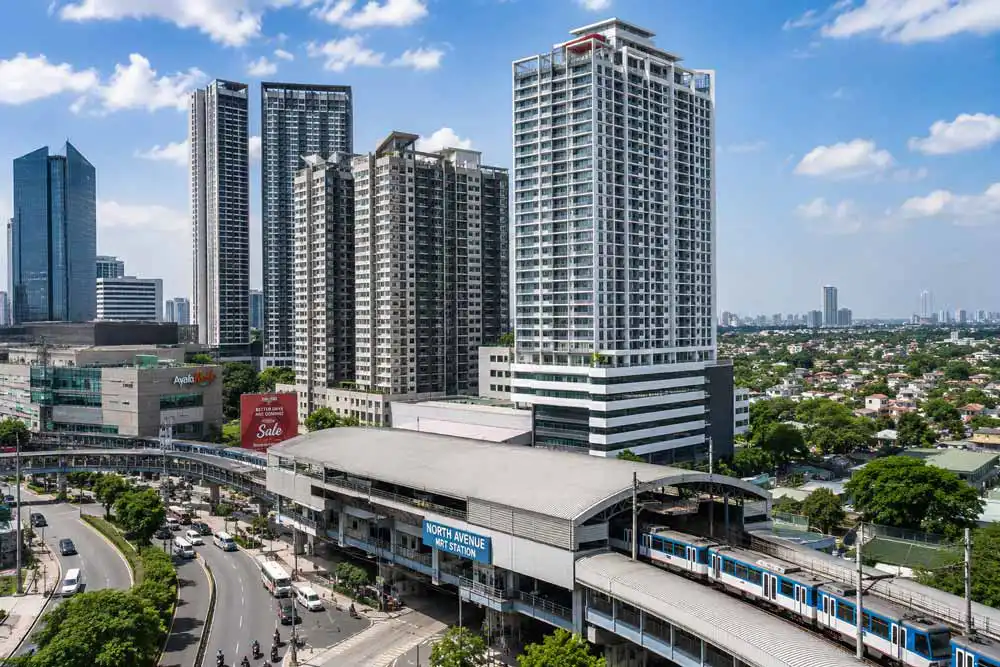
- North Triangle / Vertis North — Ayala-led, 45-hectare central business district beside TriNoma and Ayala Malls Vertis, anchored by the MRT-3 North Avenue station and the future MRT-7 terminus. Towers such as Avida Vita and Orean Place price from ₱200,000 up to over ₱330,000 per square meter. Best for buyers chasing long-term capital appreciation who can absorb the highest entry price in the city.
- Eastwood City, Libis — Megaworld’s roughly 18.5-hectare live-work-play township with a mature BPO office base, pricing ₱97,000 to ₱131,000 per square meter. The employment base underneath it keeps rental demand steadier than in other QC submarkets that sit largely empty.
- Cubao (Araneta City) — Quezon City’s prime transit hub, where MRT-3 and LRT-2 converge at the Gateway/Farmers complex. A solid affordable-to-mid resale and rental play, though the Cubao–New Manila belt is also one of the more oversupplied unsold-RFO clusters in the city, so negotiate accordingly.
- Katipunan — the student-and-faculty belt bordering UP Diliman, Ateneo de Manila, and Miriam College. Studios and 1BRs rent for roughly ₱14,000 to ₱28,000 a month, and vacancy tends to hold up better than the QC average since the tenant pool renews every semester.
- Fairview / Novaliches — Quezon City’s budget frontier, with sub-₱3 million entry units and rent-to-own terms at projects like Trees Residences and Avida Astrea. The MRT-7 line along Commonwealth Avenue, more than 80% complete with partial operations targeted for 2026 and full service around 2027, is the long-term catalyst for this corridor.
How Buying a Condo in Quezon City Works in the Philippines?
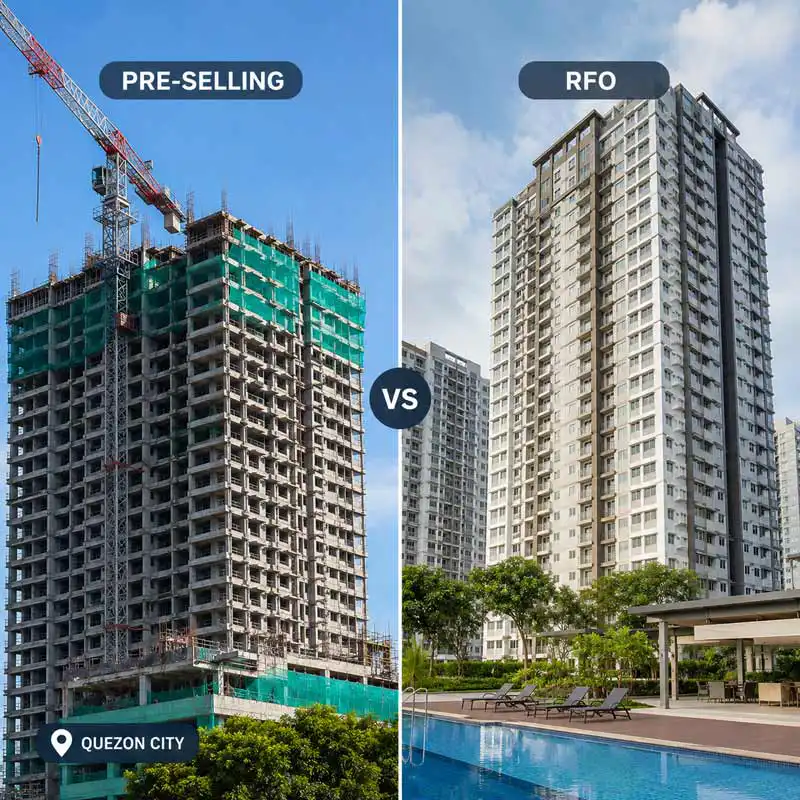
Pre-Selling vs. RFO Condo — Which Should You Choose?
Choosing between a pre-selling and ready-for-occupancy (RFO) condo is especially important in 2026. Pre-selling units offer lower entry prices, flexible payment terms, and developer incentives but require waiting several years for turnover. RFO units let you move in or earn rental income immediately, though they typically cost more. With around 78,000–81,000 unsold condo units across Metro Manila, including about 30,000 RFO units, buyers now have stronger negotiating power for discounts, waived fees, and other incentives.
Financing: Pag-IBIG, Bank Loans & Developer In-House Terms
Pag-IBIG financing is often the most affordable option for qualified Filipino buyers and OFWs, offering rates as low as 3% for socialized housing and 5.375% for regular housing loans, with financing of up to ₱6 million payable over 30 years. Banks typically offer 6%–9% fixed rates, finance 70%–80% of the property’s value, and provide terms of up to 25 years. Some developers also offer in-house financing with low down payments, but buyers should compare the total cost with Pag-IBIG before deciding.
Foreign Ownership, Legal & HOA Considerations
Can Foreigners Buy a Condo in Quezon City?
Foreigners can legally own condominium units in the Philippines under the Condominium Act (Republic Act No. 4726), provided total foreign ownership in the project does not exceed 40%. Unit owners receive a Condominium Certificate of Title (CCT) and become shareholders in the condominium corporation that owns the land and common areas. However, foreigners cannot directly own land or house-and-lot properties. These restrictions do not apply to Filipino citizens, including OFWs, who may purchase property even while abroad, often through a Special Power of Attorney (SPA).
HOA Dues & Condominium Corporation Basics
Every condo unit carries a monthly association due, typically ₱60 to ₱120 per square meter depending on the building’s amenities, covering security, maintenance, and the sinking fund for major repairs. Budget separately for utilities — a modest Quezon City studio or 1BR typically runs ₱6,000 to ₱20,000 a month in dues plus electricity and water once you’re living in or renting out the unit. Before you buy, ask to see the condominium corporation’s latest financial statement and check for pending special assessments; a building with deferred maintenance is a building where your dues are about to jump.
Taxes & Fees to Budget For
Condo taxes and fees can significantly increase your total purchase cost. For resale properties, sellers typically pay the 6% Capital Gains Tax, while buyers shoulder the 1.5% Documentary Stamp Tax, local transfer tax, and registration fees—adding about 3%–5.5% to the purchase price. For developer sales, 12% VAT may apply instead of Capital Gains Tax if the unit exceeds the VAT threshold, so confirm the applicable taxes with the developer before purchasing.
| Tax / Fee | Typical Rate | Usually Paid By |
|---|---|---|
| Capital Gains Tax (Resale) | 6% of selling price or zonal value, whichever is higher | Seller |
| Documentary Stamp Tax | 1.5% | Buyer |
| Local Transfer Tax (Manila) | up to 0.75% | Buyer |
| Registration Fees (Registry Of Deeds) | approx. 0.25%–0.75% | Buyer |
| VAT (New sale from the developer is threshold met) | 12% | Built into price, effectively buyer |
| Notary / Legal / Broker’s Fees | 0.5%–2% | Negotiable |
Who Should Buy in Quezon City Right Now — and Who Should Wait
- For OFWs: if you’re working in the US, UAE, or Singapore, the main risk isn’t the property — it’s the remote transaction. Work only with a PRC-licensed broker, verify the developer’s DHSUD registration and license to sell before paying a reservation fee, and route funds through the developer’s official collection account, never a personal one. Remittance-funded purchases remain structurally supported for Quezon City real estate for OFWs: OFW cash remittances hit an all-time high of US$35.63 billion in 2025, up 3.3% from 2024, and the World Bank estimates roughly 60% of that flow feeds directly or indirectly into Philippine housing.
- For first-time buyers: RFO units in the ₱1.8 million to ₱3.6 million band are where the market is actually moving — that segment accounted for 74% of Metro Manila’s preselling take-up in Q1 2026, up from just 27% the quarter before, as developers sweetened terms to reach exactly this buyer. Get pre-approved for Pag-IBIG financing before you shop, so you’re negotiating from your real budget, not the number printed on the price list.
- For investors: here’s the honest downside case. Gross yield doesn’t guarantee net cash flow. In an oversupplied cluster like parts of Cubao or the corridors nearer the Bay Area, vacancy can erode a projected 5% to 6% yield to something closer to 3%, once you net out HOA dues, real property tax, months of vacancy between tenants, and property management. Run your numbers at 60% of the gross yield figure, not 100%, before you commit — and treat capital appreciation as a bonus rather than the plan, given that NCR-wide condo prices are still working their way back toward pre-2018 peaks in real terms.

Is buying a condo in Quezon City a good investment in 2026?
It depends on the building and your timeline. Quezon City carries the heaviest unsold-condo inventory in Metro Manila, which favors buyers on price but weighs on short-term rental yield in oversupplied clusters. Well-located units near transit, universities, or BPO hubs — Katipunan, Eastwood, North Triangle — still post gross yields of 5% to 6% and tend to hold value better than the citywide average.
Is Quezon City oversupplied with condos?
Yes, more than any other district in the capital condo for sale in quezon city is a bit oversupplied. Quezon City carries an estimated 19,300 unsold condominium units, the largest overhang in Metro Manila as of 2025, concentrated mostly in the Cubao–New Manila belt. That oversupply gives buyers real negotiating leverage on price and terms, but vacancy risk still varies sharply by specific building, not just by district.
Can OFWs buy a condo in Quezon City while working abroad?
Yes. Foreign and Filipino citizens abroad can purchase a Quezon City condo via online transactions, meetings, presentations, unit walkthrough or through a licensed broker and a Special Power of Attorney (SPA), which lets a trusted representative sign documents, pay taxes, and process the title transfer locally. Most developers and banks now handle reservation and financing pre-approval remotely, though the SPA should still be authenticated at a Philippine consulate.
What is the best area to buy a condo in Quezon City?
There isn’t one universal answer — the best area to buy condo Quezon City depends on your goal. Araneta City in Cubao and North Triangle/Vertis North suits capital-appreciation buyers who can afford ₱150,000 – ₱200,000+ per square meter; Katipunan suits yield-focused investors targeting student rental demand; Eastwood City suits buyers wanting BPO-driven tenant stability; and Fairview/Novaliches suits first-time buyers on a sub-₱3 million budget.
How much is condo rental yield in the Philippines?
Condo rental yield Philippines-wide averages 3.8% gross in the primary market and 4.6% in the secondary market, per Leechiu Property Consultants’ 2026 data. Quezon City typically outperforms that citywide figure, with gross yields clustering around 5% to 6%, though net yield after association dues, real property tax, and vacancy usually runs 60% to 70% of the gross figure.
Is pre-selling or RFO better for a first-time buyer?
For most first-time buyers, ready-for-occupancy is the lower-risk choice in 2026: you can inspect the actual unit and skip construction- delay risk, and Metro Manila’s roughly 30,000 unsold RFO units mean real negotiating room on price and terms. Pre-selling still makes sense if your budget only works at pre-launch pricing and you can comfortably wait two to four years for turnover.
Can foreigners get a Pag-IBIG loan for a condo?
No— Foreign nationals are not allowed in Pag-IBIG condo financing. Pag-IBIG Fund membership and financing are reserved for Filipino citizens, including OFWs who maintain active contributions. Foreign nationals buying a Quezon City condo investment need to arrange financing through a commercial bank in the Philippines, which typically requires local income or a larger down payment, or pay in cash. Pag-IBIG Fund home loans are exclusively for Filipino citizens, including OFWs. Non-resident foreigners cannot secure standard mortgages from Philippine banks, which means purchasing property usually requires cash or developer financing. However, resident foreigners with a valid working or permanent visa may occasionally qualify for commercial bank loans, provided they meet strict local-income and down payment conditions.
Quezon City’s unsold-inventory number is real, and it should shape your negotiating position, not your decision to buy or not. Match the building to your actual goal — appreciation near North Triangle, yield near Katipunan or Eastwood, affordability near Fairview — verify the tax and financing math before you sign a reservation agreement, and you’ll be buying into one of the more resilient submarkets in the current Metro Manila condo market, not just betting on inventory clearing itself.
Sources: Bangko Sentral ng Pilipinas (BSP) Residential Property Price Index, Q1 2026; Colliers Philippines quarterly residential research, 2025–2026; Leechiu Property Consultants market commentary, 2026; BalayHub Quezon City market data, 2026; World Bank remittance estimates; Republic Act 4726 (Condominium Act). This article is for general information and does not constitute legal, tax, or financial advice — verify current figures with a licensed broker or professional before transacting.
Have a specific building or budget in mind? Jeraldine Tan, Senior Sales Director at Megaworld Alpha, can walk you through current Quezon City inventory, financing options, and unit availability. +63 917 899 2486 | ✉ tanjeraldine@gmail.com