This Makati City Investment Guide examines the city’s property market, investment locations, rental opportunities and risks for buyers and investors. It also explains how to evaluate Makati rental investment income and capital appreciation without relying on unsupported return projections, whether you are comparing Makati condos for sale or planning a Makati CBD property investment. Makati real estate remains one of the Philippines’ most established business and residential property markets. Its central business district brings together corporate offices, financial institutions, shopping centers, hotels, restaurants and condominium developments, creating a concentrated market for people who want to live close to work and essential services.
However, Makati City property investment requires more than choosing a property with a prestigious address. A condominium along Ayala Avenue has a different price point and tenant profile from a residential unit in Poblacion, Bangkal or Guadalupe. The same applies to commercial buildings, office spaces and properties near major roads.
Is Makati City a good place to invest in property?
Makati City can be an attractive property investment location because it combines major employment centers, established residential districts, shopping centers and public transportation. However, returns vary by neighborhood, building and purchase price. Investors should compare actual rental rates, vacancy, association dues, financing costs, property condition and resale potential before buying.
Table of Contents
Why Use This Makati City Investment Guide?
Makati developed from an established settlement into one of Metro Manila’s principal business districts. Its modern commercial center is closely associated with Ayala Avenue, the Ayala Triangle area, Greenbelt and the wider Makati Central Business District (CBD).
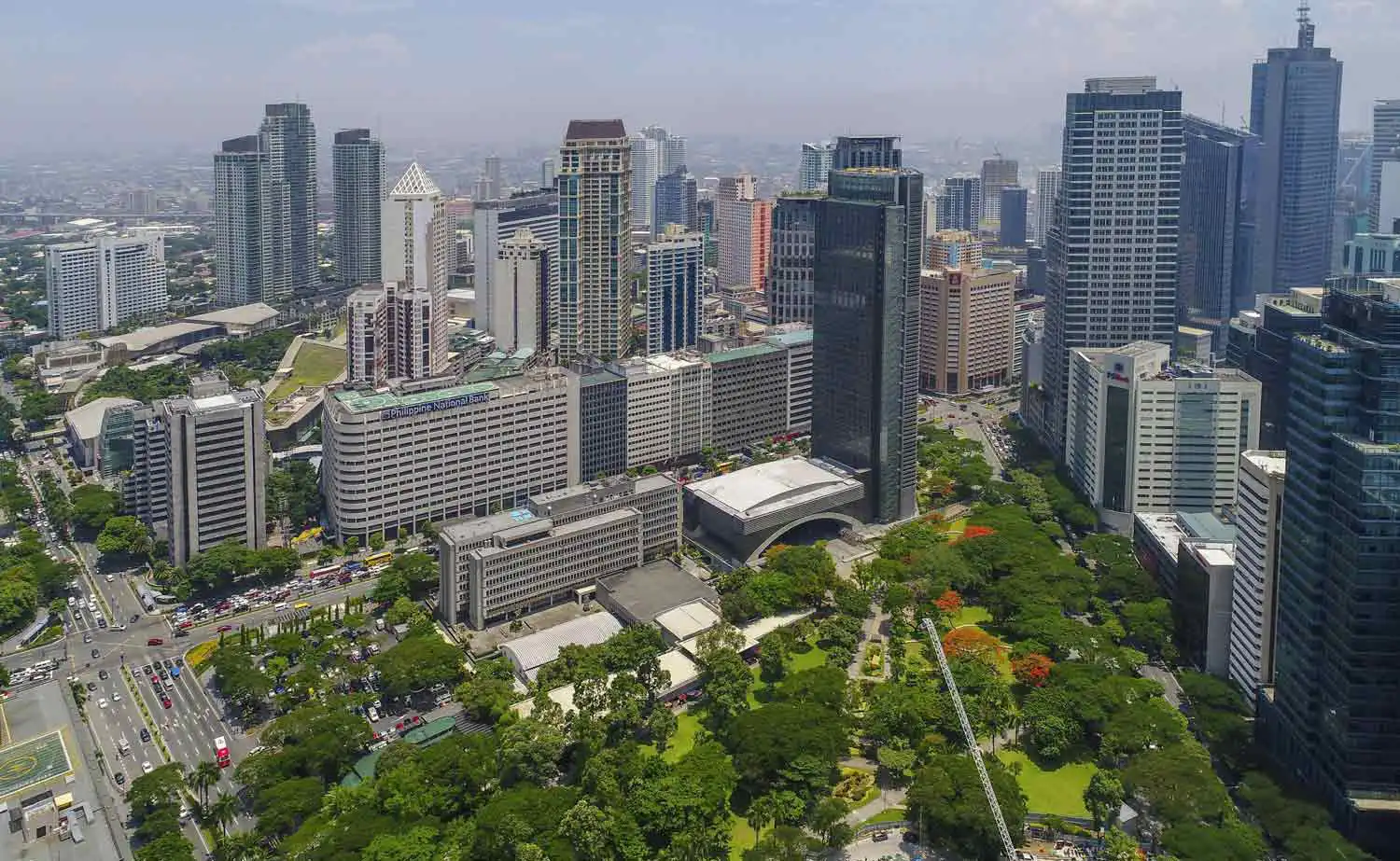
The city government reports a land area of approximately 18.17 square kilometers and 23 barangays in its published city profile. The Philippine Statistics Authority’s 2024 census data lists Makati’s population at 309,770. These figures describe the city’s resident population, not the much larger daytime population that comes to the business district for work, shopping and other activities.
Sources: Makati City Government — Basic Facts and Figures and Philippine Statistics Authority — Makati.
For investors, Makati’s significance extends beyond its residential population. Its employment centers, corporate offices, commercial establishments and transport connections create demand from people who need convenient access to the city.
That demand supports several types of property investment in Makati: residential condominiums, office spaces, retail units, commercial buildings and selected redevelopment sites.
The Makati property market is not uniform, however. Investment decisions should be based on the specific district, property type, acquisition cost and intended tenant.
Best Areas to Invest in Makati: Neighborhood-by-Neighborhood Guide
Makati CBD Property Investment and Ayala Avenue | Best Areas To Invest in Makati
This section of the Makati City Investment Guide compares the main submarkets so you can match each location to a tenant type.
The Makati CBD is the city’s principal commercial and financial district. It contains major office buildings, hotels, shopping destinations and residential towers, particularly around Ayala Avenue, Makati Avenue, Legazpi Village and Salcedo Village.
he main advantage of Makati CBD property investment is proximity to employment and commercial activity. Residential units in accessible locations can appeal to corporate employees, professionals, expatriates and households that prefer shorter commutes.
The trade-off is the cost of entry. Premium addresses often require higher acquisition budgets, and a high selling price can reduce rental yield even when the property commands a relatively strong rent.
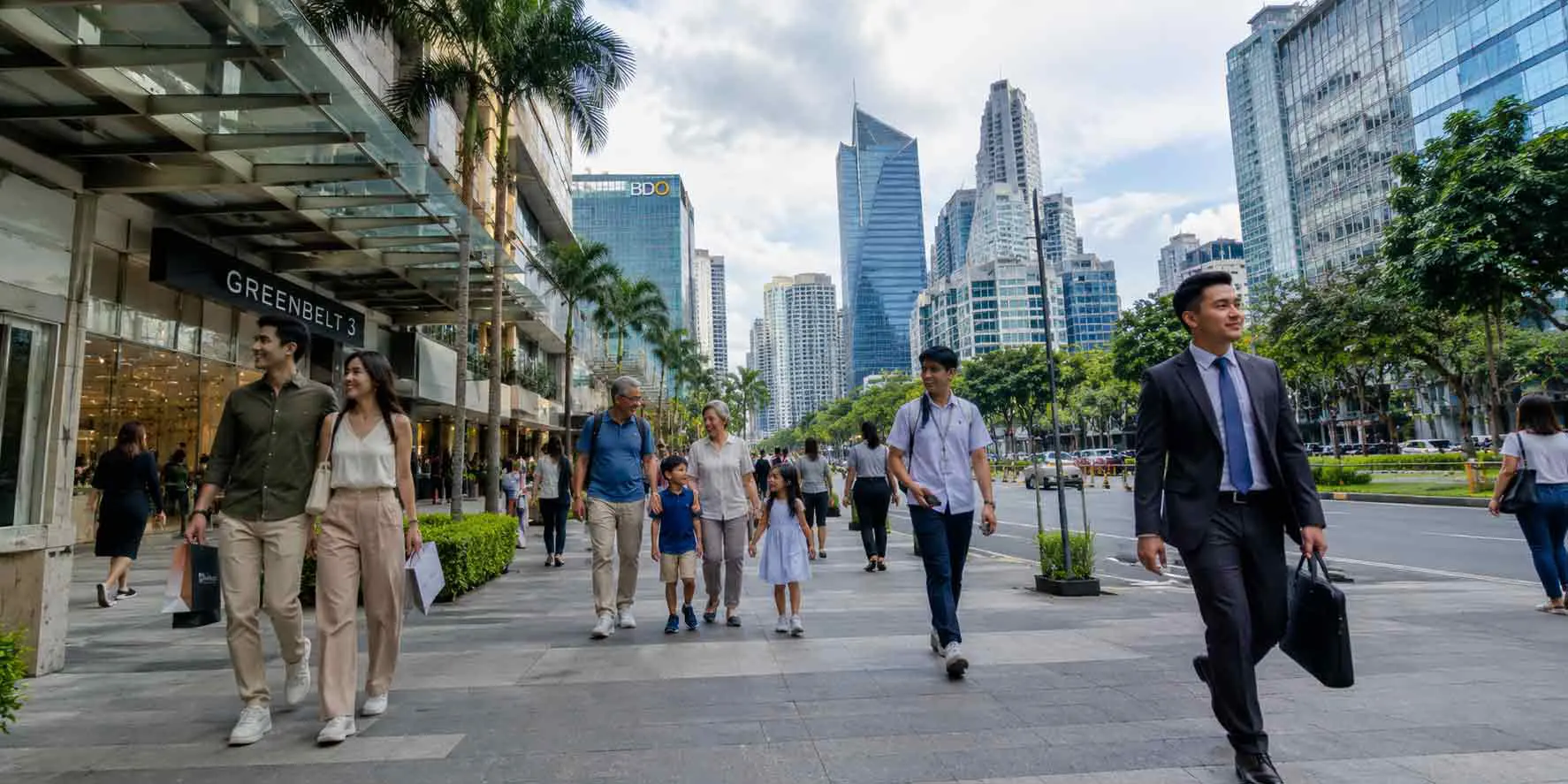
Salcedo Village
Salcedo Village combines residential condominiums, offices, restaurants and neighborhood retail. Its location within the wider CBD makes it relevant to professionals who value walkability and access to business establishments.
For landlords, the key considerations include the building’s age, unit layout, furnishing, association dues and the availability of comparable rental units. Two apartments within the same neighborhood can produce very different results because of their condition and price.
Legazpi Village
Legazpi Village is another established residential and commercial district near major offices and retail destinations. Its mix of residential towers, restaurants and business establishments supports demand from professionals and other urban residents.
Anyone studying Makati condo investment in Legazpi Village should compare walking access with the actual unit’s purchase price. Proximity to the CBD is valuable only to the extent that the resulting rental demand justifies the cost of ownership.
Rockwell Center
Rockwell Center is a master-planned mixed-use development known for its residential towers, Power Plant Mall, offices and lifestyle-oriented environment.
Makati condos for sale in Rockwell are generally associated with premium residential property
For a prospective investor, the relevant comparison is not simply Rockwell versus the rest of Makati. It is the expected rent, ownership expenses, purchase price and resale market of the specific unit against comparable properties.
Poblacion
Poblacion has a distinct mix of residential communities, restaurants, hospitality establishments and nightlife. Its proximity to the CBD makes it relevant to buyers looking for a different price point or a neighborhood with a more varied commercial character.
However, investors should assess noise, parking, building management, street conditions and the exact location of the property. Demand for a short-term or furnished Makati rental investment should never be assumed without checking current rules, competing listings and the property’s permitted use.
Chino Roces Extension cor Edsa
These areas include a mixture of residential properties, commercial establishments, offices and properties along major roads.
They may appeal to investors comparing the best areas to invest in Makati outside the premium core of the CBD. Some locations provide access to the CBD and other business districts without the same purchase price as a prime central address.
The investment case depends on the specific street, accessibility, nearby employment, property condition and the amount of competing supply. For commercial lots and older buildings, land use, title conditions and redevelopment feasibility also require careful verification.
Guadalupe and Magallanes
Guadalupe provides access to EDSA, the MRT-3 corridor and connections toward other parts of Metro Manila. Magallanes is relevant to motorists and residents who prioritize access to major roads and the southern metropolitan corridor.
For Makati City property investment, these neighborhoods should be evaluated according to the buyer’s intended use. A commuter-oriented residential unit, a family home and a commercial property have different demand drivers.
Makati Real Estate Market 2026: Property Prices and Rental Market
Makati contains some of the Philippines’ most expensive residential and commercial locations. However, there is no single price per square meter that accurately represents every property in the city. When using this Makati City Investment Guide to compare neighborhoods, assess each property’s acquisition cost, rental demand, expenses and resale potential.

A useful starting point throughout this Makati City Investment Guide, price figures are benchmarks for comparison, not quotes is to distinguish between the prime CBD, established residential neighborhoods and more affordable fringe locations.
According to market figures attributed to Colliers and reported by PhilSTAR Property in September 2026, the following Makati real estate market 2026 benchmarks were recorded for the CBD as of Q2 2026:
| Market indicator | Reported benchmark |
|---|---|
| Average land values in Makati CBD | Approximately ₱1,000,000/sqm |
| Secondary-market condominium prices | ₱248,000–₱309,000/sqm |
| Average condominium rents for one- to three-bedroom units | ₱840–₱1,000/sqm/month |
| Pre-selling condominium prices | Approximately ₱500,000/sqm |
| Reported prices in selected prime locations | ₱526,000–₱885,000/sqm |
Source: PhilSTAR Property — Makati CBD property market, September 2026.
These are market-research benchmarks, not guaranteed transaction values. The reported figures cover different property categories and should not be combined as if they describe one uniform market.
For example, a pre-selling unit’s advertised price may not be directly comparable with the resale price of an older condominium. The properties can differ in amenities, turnover status, furnishing, payment terms and building condition.
Likewise, for a makati rental investment, a rent per square meter calculated from a furnished studio may not be directly comparable with a larger, unfurnished apartment.
The best pricing evidence is a set of genuinely comparable properties in the same building or immediate submarket.
What is happening in Makati’s office market?
Makati’s office sector remains an important part of its investment story because corporate employment supports demand for nearby residential, retail and hospitality properties.
JLL’s Q2 2026 Manila office report recorded a decline in vacancy across its combined Makati City and Taguig City Grade A office market. The reported vacancy rate was 13.8%, while average monthly rent reached ₱1,108.10 per square meter.
JLL also reported positive office leasing activity during the quarter and noted that approximately 202,200 square meters of office space remained in the pipeline for delivery by the end of 2026.
Source: JLL — Manila Office Market Report, Q2 2026.
These figures cover the combined Makati–Taguig Grade A office market, so they should not be presented as Makati CBD-only statistics.
The broader implication is that office demand and supply continue to change. Corporate tenants may prioritize well-located buildings with modern facilities, reliable building operations and sustainability features.
For office-property investors, this creates a distinction between prime, well-maintained assets and older buildings that may need substantial upgrades to remain competitive.
A commercial property should therefore be evaluated through tenant quality, lease terms, vacancy history, maintenance requirements, building condition and the cost of future improvements.
Infrastructure and Accessibility in Makati City Property Investment
Makati benefits from its position within Metro Manila’s established road and public transportation network.
Important connections include EDSA, Ayala Avenue, Gil Puyat Avenue, Makati Avenue, Chino Roces Avenue and the South Luzon Expressway corridor. These routes link the city’s commercial and residential districts with surrounding cities and employment centers.
Rail access is also relevant. The MRT-3 serves the Ayala, Buendia, Guadalupe and Magallanes corridors, among other stations. The city’s accessibility depends on the specific neighborhood: a property described as being in Makati may still require a substantial walk, feeder ride or drive to reach a station.
For airport access, Makati CBD is relatively close to Ninoy Aquino International Airport compared with many northern Metro Manila locations. However, travel distance and journey time vary with the starting point, chosen route and traffic. Investors should verify actual routes instead of relying on a single citywide distance.
The proposed Makati City Subway System is another infrastructure development worth monitoring. The PPP Center lists the project as being in the pre-construction stage. That status should not be interpreted as a guarantee of an opening date or an immediate increase in property prices.
Source: PPP Center — Project Database.
Infrastructure can improve accessibility and support demand, but its effect on property values is not automatic. Acquisition prices may already reflect anticipated improvements, and construction delays, access limitations or competing developments can alter the outcome.
Living in Makati: schools, hospitals, retail and lifestyle
Makati’s appeal to residents comes from the concentration of work, shopping, healthcare, education and everyday services within a relatively compact urban area.
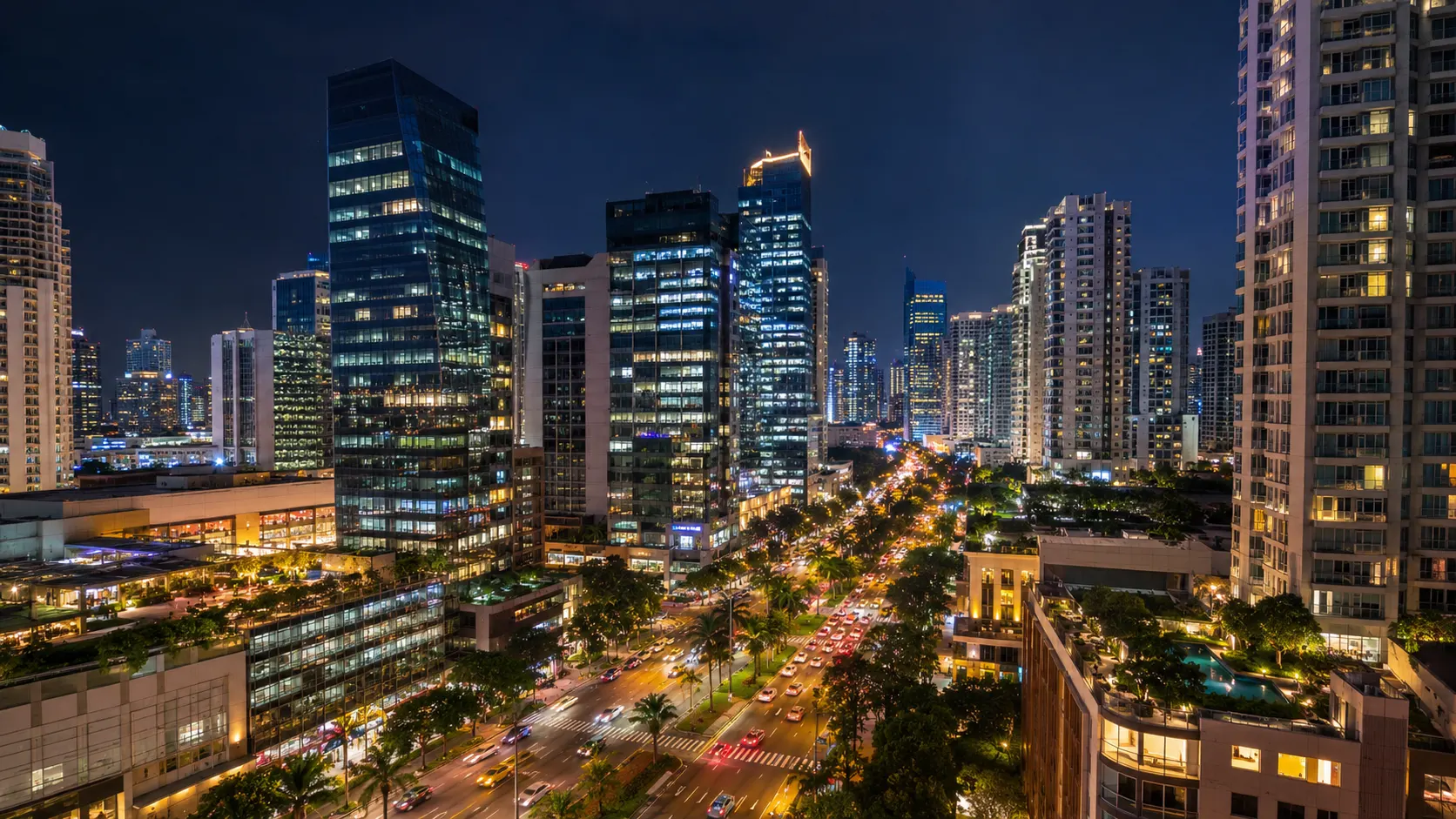
Shopping and commercial centers
Major shopping destinations include Greenbelt, Glorietta, SM Makati, Power Plant Mall and Century City Mall. These establishments serve different districts and consumer markets.
For residents, convenient access to shopping, dining and services can reduce travel time. For Makati real estate investors, nearby commercial activity can strengthen a property’s appeal, although it does not guarantee a specific rental premium.
Education
Makati has a mix of public and private schools and access to higher education institutions within the city and surrounding areas.
Examples include the University of Makati and several private schools serving local residential communities. Families buying for their own use should assess the actual school catchment, admission requirements and travel time rather than relying only on a property’s advertised proximity.
Healthcare
The city has public and private healthcare facilities, including Makati Medical Center. Healthcare access is particularly relevant to households seeking long-term residence and to professionals who want to remain near major medical services.
Investors should distinguish between facilities within the city and those located in neighboring cities, even when both are accessible from the same residential district.
Parks and recreation
Ayala Triangle Gardens, Washington SyCip Park and Legazpi Active Park are examples of green and recreational spaces within the wider CBD area.
These spaces contribute to the quality of the urban environment and provide residents with places for exercise, relaxation and outdoor activities. Their value to a particular property depends on actual walking access, surroundings and the resident’s preferences.
Is Makati City a good place to invest in property?
Makati can be an attractive property investment location because it combines established employment centers, commercial infrastructure, residential communities and transport connections.
However, an attractive location does not automatically mean a good investment.
A condominium bought at a high price may produce a modest rental yield even if it rents consistently. An older building may require major repairs. A property with high association dues may be less competitive than a similar unit in a more efficiently managed development.
The residential market also faces broader Metro Manila supply and vacancy concerns. Colliers’ Q2 2026 residential report projected that Metro Manila condominium vacancy could peak at 25.6% during 2026. This is a metropolitan forecast, not a Makati-specific vacancy rate.
Source: Colliers — Q2 2026 Residential Market Report.
Makati’s established CBD may behave differently from areas with more substantial incoming residential supply. Nevertheless, investors should confirm demand at the building and neighborhood levels rather than assuming that all Makati properties are insulated from market-wide pressures.
How to calculate the rental return on a Makati condominium
Consider an illustrative property purchased for ₱8 million that earns ₱30,000 per month in rent.
Its potential annual gross rental income is:
₱30,000 × 12 = ₱360,000.
The gross rental yield would be:
₱360,000 ÷ ₱8,000,000 × 100 = 4.5%.
This is an illustrative calculation, not a claim about the average Makati rental yield.
The actual return may be lower after vacancy, association dues, repairs, property management, insurance, property taxes and other recurring expenses. If the purchase is financed, loan interest and other financing costs also affect cash flow.
A more useful analysis estimates net operating income before calculating the property’s net operating yield. Investors should separately model cash flow after debt service if they plan to use a mortgage.
For a more realistic assessment, gather the following information:
- The complete acquisition cost, including applicable transaction expenses.
- Actual rental comparables in the same building or nearby buildings.
- Expected vacancy and tenant turnover.
- Association dues and maintenance obligations.
- Furnishing, repairs and property management costs.
- Financing terms, if applicable.
- Potential resale value and the costs of selling.
A conservative estimate is more useful than a high projected yield based on an unverified asking rent.
Makati Condos for Sale: Pre-Selling vs. Ready-for-Occupancy
Pre-selling and ready-for-occupancy (RFO) properties serve different buyer needs.
Pre-selling can offer staged payments and access to a new development before completion. However, the buyer must account for construction and turnover timelines, contract conditions, financing eligibility, and the possibility that market rents or selling prices may differ from initial expectations.
An RFO property like VION WEST and VION TOWER by Megaworld allows the buyer to inspect the actual unit and building, review the existing surroundings and investigate rental comparables. In some circumstances, the buyer may begin leasing after completing the transaction and any necessary fit-out.
Neither option is automatically superior.
Compare the total contract price, payment schedule, financing costs, turnover obligations, association dues and realistic rent. Where the property is intended for investment, the relevant comparison is the risk-adjusted financial outcome, not simply the advertised discount.
Legal and financial checks before buying
Before completing a purchase, review the following:
- Title and ownership: Verify the applicable title, ownership details, encumbrances and other material annotations through the appropriate Registry of Deeds and qualified professionals.
- Condominium documentation: Review the Condominium Certificate of Title (CCT), master deed, declaration of restrictions, house rules and relevant project documents.
- Developer and project status: Verify applicable licenses, registration documents and other requirements with the relevant authorities, including DHSUD where applicable.
- Taxes and transaction costs: Determine which taxes, transfer charges, registration fees and other expenses apply to the specific transaction. Do not assume that every transfer has the same tax treatment.
- Building management: Examine association dues, maintenance history, reserve funds, special assessments and the management of common areas.
- Financing: Compare the effective borrowing cost, repayment schedule, fees and loan conditions with the expected rental income.
- Rental rules: Confirm whether the intended leasing arrangement is permitted under the property’s governing documents and applicable rules.
Capital gains tax, documentary stamp tax, local transfer tax and registration expenses may be relevant, depending on the transaction and applicable law. Responsibility for payment should be confirmed through the contract, tax rules and professional advice rather than assumed from informal market practice.
The bottom line for Makati property investors
Ultimately, this Makati City Investment Guide is a starting point for evaluating specific properties rather than assuming every Makati address guarantees strong returns.
Makati’s property market offers a range of opportunities, from premium CBD condominiums and established residential buildings to commercial spaces and selected redevelopment properties.
Its main advantage is the concentration of employment, retail, services and transportation. These factors support the city’s long-standing role as a major business and residential destination.
Its main challenge for investors is the relationship between acquisition cost and achievable income. A prestigious address cannot compensate for an excessive purchase price, weak rental demand or high recurring expenses.
Before investing, identify the intended tenant or buyer, compare similar properties, calculate realistic net income and assess the potential exit market.
The most important question is not simply whether Makati is a good property market. It is whether the specific property, at the price offered, can deliver an acceptable return for the risks you are willing to take.
Frequently Asked Questions (FAQs)
Which area in Makati is best for property investment?
The best area depends on your budget and investment objective. Makati CBD, Salcedo Village and Legazpi Village appeal to buyers seeking proximity to offices and commercial establishments. Chino Roces Ext. corner Edsa offer other price points and property characteristics.
How much does a condominium cost in Makati?
Prices vary significantly by building, location, age and unit condition. Q2 2026 market reporting placed secondary-market condominium prices in Makati CBD at approximately ₱248,000–₱309,000 per square meter, while reported pre-selling prices averaged around ₱500,000 per square meter. These are market benchmarks, not fixed prices for every property.
How much rent can I earn from a Makati condo?
Rental income depends on the unit’s location, size, furnishings, condition, building amenities and competition. Q2 2026 reporting cited monthly rents of approximately ₱840–₱1,000 per square meter for one- to three-bedroom units in Makati CBD. Check comparable units in the specific building before estimating income.
Is Makati CBD better than Rockwell for investment?
Neither is automatically better. Makati CBD offers access to a dense office and commercial district, while Rockwell has a distinct premium mixed-use residential environment. Compare the actual acquisition cost, rent, expenses, vacancy, building quality and resale demand.
Is buying a pre-selling condo in Makati worth it?
It may suit buyers who can accept a longer holding period and construction-related uncertainty. RFO properties allow direct inspection and may provide an earlier opportunity to lease. Compare the complete purchase cost and realistic rental economics rather than relying only on the developer’s advertised discount.
What are the risks of investing in Makati real estate?
Risks include overpaying, rental vacancy, competition from comparable properties, high association dues, maintenance expenses, financing costs, construction delays for pre-selling projects and changes in market demand. Older commercial or residential buildings may also require substantial upgrades.
What taxes and fees should I consider when buying a Makati property?
Depending on the transaction, costs may include capital gains tax, documentary stamp tax, local transfer tax, registration fees and legal or documentation expenses. Condominium owners should also budget for association dues, property taxes and maintenance. Verify the applicable treatment with the BIR, Makati City Government, Registry of Deeds and qualified professionals.
To Know More About Makati City Investment Guide, Call Us or Fill out our inquiry form below: