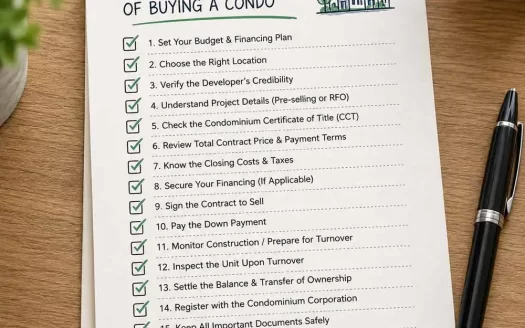
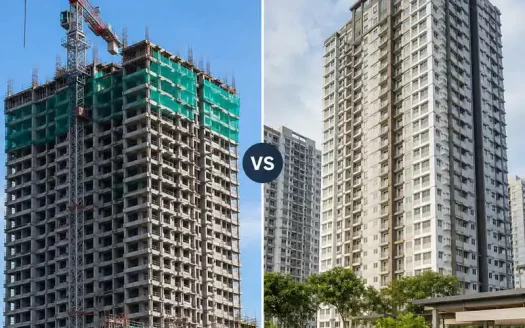
7 Smart Steps for OFW Real Estate Investment in Cavite Philippines
7 Smart Steps: OFW Real Estate Investment in the Philippines — Starting With a Cavite Lot

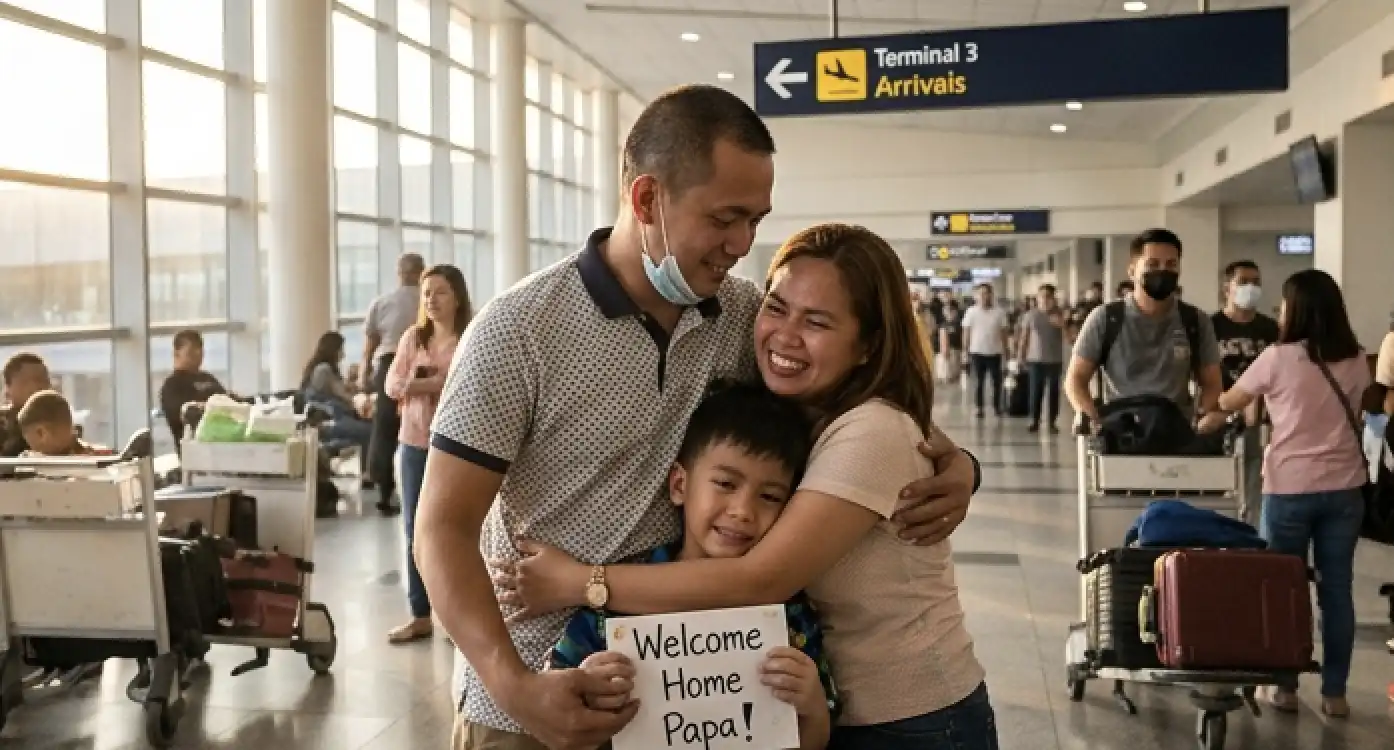
Every OFW has thought about it. overseas Filipino real estate decisions are rarely just financial — they’re tied to the life you’re building back home. You’re working hard abroad, sending money home, watching the peso move, and wondering: Is my money actually building anything lasting?
For many overseas Filipinos, OFW real estate investment Philippines is the answer — not as a luxury, but as a financial foundation. A lot in the right location, in the right township, can quietly appreciate while you focus on your work overseas. But buying property from abroad without a clear process is where most OFWs make expensive mistakes.
This OFW property investment guide covers everything: how to choose the right property, how to transact remotely or how to buy lot philippines from abroad, how to finance it, and how to manage it without flying home every time something needs a signature. The focus here is on residential lots in Cavite or cavite lot investment Philippines — specifically in master-planned townships — because for OFW buyers, this is one of the most defensible, low-maintenance investment structures available today.
Why Cavite Lots Are the OFW Investment of Choice in 2026
Not every property type suits an OFW’s situation. A condominium has monthly dues, potential vacancy issues, and requires active management. A house-and-lot in a non-gated area needs maintenance. But a residential lot in a master-planned township like Maple Grove in General Trias, Cavite, sits in a completely different category.
Which is why a lot for sale in Cavite is consistently one of the first properties OFW buyers shortlist:
Land appreciates without your involvement. A vacant lot in a well-run township gains value as the surrounding ecosystem develops — malls open, offices fill up, roads improve. You don’t manage tenants. You don’t deal with leaky roofs. The asset works while you’re in Qatar, Dubai, or Singapore.
Cavite is where OFW remittances go. BSP data consistently points to Cavite and nearby CALABARZON provinces as top OFW property investment destinations in the Philippines. The demand is real, and it comes from people who understand the market from the outside — because they’ve lived and worked abroad.
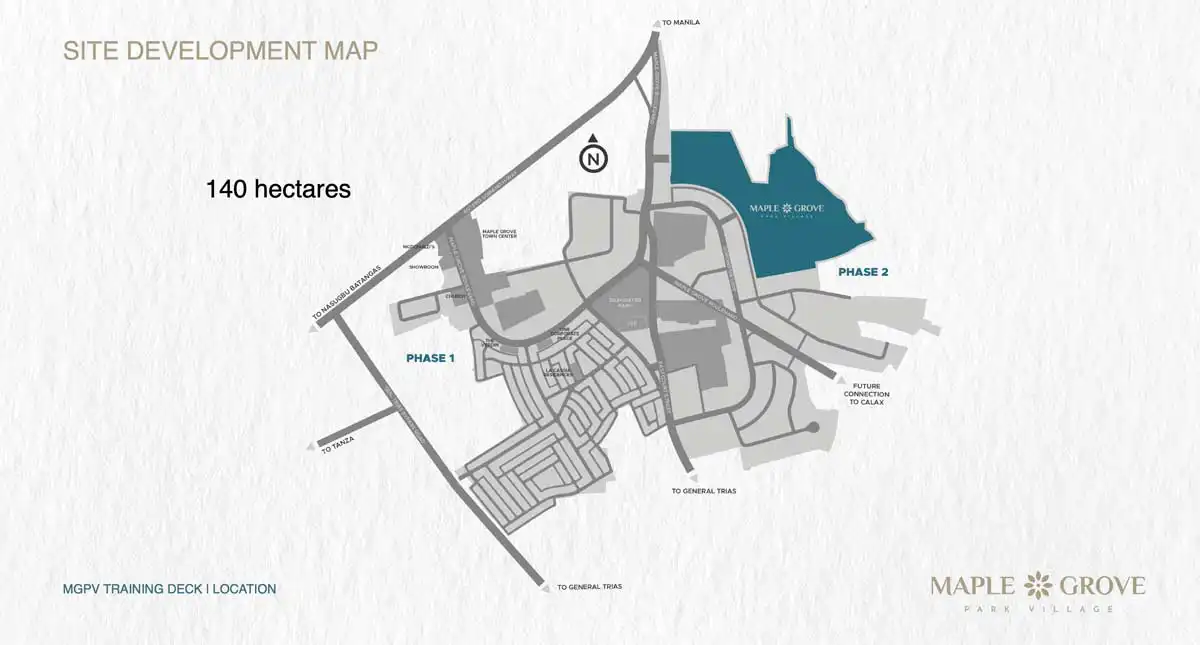
General Trias specifically is undervalued relative to its fundamentals. It hosts the Export Processing Zone Authority (EPZA), sits along the CALAX corridor, and has Megaworld’s 140-hectare Maple Grove Township anchoring its central district. Land prices here are still significantly lower than Taguig or Alabang, but the growth story is comparable.
The township premium protects your investment. Standalone lots in random subdivisions can stagnate. Lots inside Megaworld’s integrated townships — where the developer is still building out commercial, retail, and office components — appreciate according to a structured, multi-year development plan. For OFWs who can’t monitor the property constantly, that developer infrastructure is a meaningful safety net.
Step 1 — Define Your Investment Goal Before You Search for a Property
For many OFWs, this is a remittance property investment — a way to convert monthly earnings into a hard asset that grows independently. Before looking at any listing, answer these three questions honestly:
Why are you buying?
- Long-term land banking (hold 7–10+ years, sell later)
- Building your family’s permanent home eventually
- Diversifying remittance savings into a hard asset
- All of the above
What is your timeline? This matters enormously. A lot in a pre-selling or under-construction township requires patience. If you need to see a return in 3 years or less, a lot may not be the right vehicle. If you’re building wealth over 7–10 years, a lot in an early-growth township is one of the best structures available.
What can you afford monthly without stress? OFW buyers often overcommit because the exchange rate makes Philippine prices look manageable. Run the numbers in your host country’s currency, not just in pesos. A monthly amortization that’s easy on paper becomes a burden if your contract ends or remittances slow down.
Once you’re clear on these three points, property selection becomes much simpler.
Step 2 — Choose the Right Developer and Location

Not all developers are equal when you’re buying from abroad. When you can’t visit regularly, developer reputation is your primary risk management tool.
For OFW buyers, the safest structure is a lot inside a township developed by one of the Philippines’ publicly listed real estate companies — Megaworld, Ayala Land, SMDC, or Federal Land. These developers have regulatory accountability, track records you can verify, and structured after-sales teams.
Why Megaworld’s Maple Grove Park Village specifically:
- It’s inside a 140-hectare master-planned township in General Trias, Cavite — Megaworld’s 22nd integrated urban township.
- 377 lots ranging from 280 to 518 sqm, a residential lot in General Trias inside a Megaworld township gives you the cleanest combination of a community that includes commercial retail, office towers, and residential condominiums already operating around it
- The township is envisioned as the Makati of Southern Luzon — a serious long-term positioning that reflects the development’s ambition and Megaworld’s investment in the area
- Turnover is May 31, 2026, with a 12-month grace period — the timeline is defined and documented
- Designed by WATG (Wimberly Allison Tong & Goo), the same internationally acclaimed resort firm behind some of Asia’s finest residential communities
For the full property overview, see the Maple Grove Park Village page.
Step 3 — Understand the Full Cost Before You Commit
The purchase price is only one part of what you’ll actually spend. Before reserving, understand these numbers:
Reservation fee: ₱70,000 — this secures your lot and takes it off the market
Down payment: Typically 10–20% of the total contract price, paid over 24 months
Monthly amortization: Based on the balance after down payment, either through in-house financing or a bank loan
Transfer taxes and fees: When the title is transferred to your name — typically Bureau of Internal Revenue (BIR) Documentary Stamp Tax, Transfer Tax, and Registration Fee — budget approximately 3–5% of the contract price
Real estate tax (Amilyar): Annual carrying cost for the lot, even while vacant. Manageable, but budget for it across your entire holding period.
Homeowners’ Association (HOA) dues: Charged by the township for maintaining common areas, security, and facilities
None of these costs should surprise you if you plan for them upfront. Ask your accredited Sales Director for a complete breakdown before signing anything.
Step 4 — How to Transact Remotely as an OFW
OFW Buying Property Remotely: How the Process Actually WorksThis is where most OFWs feel uncertain — and where having the right agent makes the biggest difference. Here’s how the remote buying process actually works:
Special Power of Attorney (SPA). If you can’t be physically present in the Philippines for signing, you’ll need an SPA — a notarized document that authorizes a trusted representative (family member, lawyer, or agent) to sign on your behalf. If you’re in a country with a Philippine consulate, you can have your SPA authenticated (Apostille) there.
Online consultations. Reputable Megaworld agents conduct full consultations via Zoom, Viber, or WhatsApp. You can review pricing, ask questions, see unit availabilities, and receive sample computations — all without being in the Philippines.
Digital documentation. Reservation agreements, buyer’s information sheets, and financing documents can be sent, signed, and returned digitally in many cases, though some documents may require wet signatures. Your agent will guide you through what requires physical signatures and what can be handled electronically.
Payment via bank transfer or remittance. Payments can be made through international bank transfers or accredited remittance centers directly to Megaworld’s corporate accounts. Keep all official receipts — you’ll need them for title transfer later.
Trusted point of contact. Assign a local representative — a family member, trusted friend, or lawyer — who can physically attend to anything that requires local presence: site visits, document submissions, or HOA meetings.
Step 5 — Choose Your Financing Structure
OFW buyers have two primary financing options for a Cavite lot purchase:
In-house installment (Megaworld developer financing)
- Simpler qualification process — no bank required
- Longer payment terms available
- No need for extensive banking documentation
- Best for OFWs who may not have PH-based bank accounts or credit history
Bank financing (home loan for lot purchase)
- Generally lower interest rates than in-house terms
- Requires proof of income, bank statements, employment contract
- Major PH banks that offer lot loans: BDO, BPI, Metrobank, UnionBank, PNB
- OFW-specific loan programs are available at most major banks — these recognize overseas employment contracts and remittance history as valid income documentation
- Typical LTV (Loan-to-Value) ratio for lots: 60–70% of appraised value
- Approval timelines: 2–6 weeks depending on the bank and completeness of documents
For most OFWs buying their first Philippine property, in-house financing is the simpler starting point. Once you’re established with PH banking relationships, bank refinancing becomes an option.
Step 6 — Manage the Asset While You’re Abroad
Once reserved and being paid, your lot is a relatively passive asset — especially inside a gated Megaworld township. But there are a few things to set up before you go back overseas:
Assign a local representative. Ideally someone you trust completely. They’ll be your eyes on the ground — attending HOA meetings, checking on any notices from the developer, and coordinating site visits after turnover.
Set up auto-debit for monthly payments. Most banks and developers support auto-debit arrangements for amortization. One less thing to manually manage from abroad.
Keep all documents organized digitally. Scan and store your reservation agreement, official receipts, buyer’s information sheet, and any correspondence with Megaworld. Cloud storage makes these accessible anywhere.
Stay updated on township milestones. Follow Megaworld’s official channels and your agent’s updates. Every commercial development milestone in Maple Grove — a new mall tenant, a new office occupant — is a signal of appreciation in your lot’s value.
Step 7 — Plan Your Exit or Build Strategy
A lot investment in Philippines has two primary endpoints: sell the land at appreciated value, or build a home on it.
Selling: Once the title is in your name and the township has matured, selling through an accredited broker is straightforward. Lots in completed Megaworld townships command a premium over comparable standalone lots in the same municipality.
Building: If the plan is to eventually build your family home, start the architectural planning process early — even informally. Get a design direction aligned during the holding period. Once turnover happens and title transfer completes, you’re ready to pull building permits and begin construction without delay.
Either way, the land appreciates through the holding period. The exit is up to you.
The OFW Exchange Rate Advantage — and How to Avoid Getting Scammed While Using It
Here’s something most local property buyers will never experience: the currency advantage of overseas Filipino real estate investment. When you earn in US dollars, UAE dirhams, Singapore dollars, or British pounds and convert to Philippine pesos, that ₱19,980,000 starting price for a residential lot in General Trias looks very different on your payslip than it does to someone earning entirely in pesos.
To put it in concrete terms — an OFW earning USD 2,500 per month (a modest salary by international standards) takes home approximately ₱140,000–₱145,000 per month at current exchange rates. That same income in the Philippines would make a ₱20M lot purchase feel unreachable. For an OFW, it’s a 10–12 year savings target — or a manageable financed purchase with in-house installment terms spreading the payments over the same period.
This is the structural financial advantage that makes Cavite lot investment so compelling for OFWs specifically: you’re pricing a Philippine asset with foreign-currency purchasing power. The peso’s long-term depreciation trend against major currencies means that the longer you wait, the more your host-country salary buys in Philippine real estate — but also, the higher Philippine land prices climb in nominal peso terms. Buying now, while the exchange rate works in your favor and the township is still in early build-out, captures both advantages simultaneously.
This is also exactly why OFW buyers are primary targets for online real estate scams. The same visibility that makes you an attractive client for legitimate agents makes you a target for fraudulent ones. If you are an OFW buying property remotely, here is what you must verify before sending a single peso to anyone:
Verify the agent’s accreditation. Every legitimate Megaworld seller is an accredited agent registered with the Professional Regulation Commission (PRC) and DHSUD as a licensed real estate broker or salesperson, and is authorized by Megaworld directly. Ask for the agent’s full name, PRC license number, and Megaworld accreditation details — then verify them directly with Megaworld’s corporate office before proceeding.
All payments go to Megaworld’s official accounts only. No legitimate Megaworld lot for sale through an OFW channel requires payment to a personal bank account — ever. Payments are made directly to Megaworld Corporation’s corporate accounts. Reservation fees, down payments, and amortizations all go through official Megaworld payment channels with official receipts issued. If anyone asks you to wire money to a personal account, stop the transaction immediately.
Demand official documentation at every stage. A legitimate Megaworld lot for OFW transaction produces a signed Reservation Agreement on Megaworld letterhead, official receipts with Megaworld’s BIR-registered TIN, and a Contract to Sell within 60–90 days of your first payments. If any of these are delayed, vague, or unavailable — escalate directly to Megaworld’s corporate office.
Use video verification. Any credible agent facilitating a remittance property investment of this size should be willing to do a live video call, share their ID on screen, show you the Megaworld accreditation document, and conduct a virtual site tour. If they refuse or deflect any of these requests, walk away.
The exchange rate gives OFW buyers a real financial edge in Philippine real estate. Protecting that edge starts with transacting through the right people.
Final Thoughts
OFW real estate investment Philippines doesn’t have to be complicated, risky, or stressful. The key is choosing the right structure — land in a master-planned township, with a credible developer, through an accredited agent who can manage the process remotely with you.
General Trias, Cavite offers one of the strongest risk-to-reward profiles for OFW buyers right now. The infrastructure is in place. The township is maturing. A Megaworld lot for OFW buyers is particularly well-suited because the entry prices are still ahead of the appreciation curve.
You’ve spent years building savings abroad. Make sure those savings are building something permanent back home.
Frequently Asked Questions (FAQs) – OFW Real Estate Investment Philippines
Can an OFW buy a lot in the Philippines without coming home?
Yes. Through an online meeting and reservation, or a Special Power of Attorney (SPA), an authorized representative can sign documents on your behalf. Online consultations, digital payments, and remote coordination with an accredited agent make it possible to complete most of the purchase process from abroad.
What is the minimum budget for an OFW to invest in a Cavite lot?
At Maple Grove Park Village, lots start at ₱19,980,000 for 280–299 sqm cuts. With typical in-house financing terms, the monthly amortization is manageable on an OFW income. Contact us at 0917 899 2486 for a sample computation based on your budget.
Is a lot better than a condo for OFW investors?
For OFWs who won’t be physically present in the Philippines, a lot in a master-planned township is often the lower-maintenance option. There are no tenants to manage, no unit conditions to monitor, and no vacancy risk. The asset appreciates based on township development — not rental demand. It is always depends on investment purposes.
Which banks offer lot loans for OFWs in the Philippines?
BDO, BPI, Metrobank, UnionBank, and PNB all offer OFW-specific home loan programs. Requirements typically include your overseas employment contract, proof of remittances, and valid government IDs.
How long does the OFW lot buying process take?
From initial inquiry to reservation typically takes 1-3 days once you’ve decided on a lot. Title transfer happens after full payment or after the bank loan is released — which can take 6 months to over a year depending on the financing structure.
What documents do OFWs need to buy property in the Philippines?
Core requirements include: valid passport, OFW employment contract or proof of income, TIN number, and a Special Power of Attorney if transacting through a representative. Your agent will provide the complete checklist.
Is Maple Grove Park Village a good OFW investment?
For OFWs with a 7–10 year holding horizon, yes. It’s a professionally managed, gated lot development inside a 140-hectare Megaworld township with commercial, retail, and office infrastructure driving long-term appreciation. It requires minimal local management once reserved and being paid.
Ready to start? Contact Jeraldine Tan, Megaworld accredited Sr. Sales Director, at 0917 899 2486 (calls, Viber, WhatsApp) or email tanjeraldine@gmail.com or info@megaworldmakati.com for a free consultation and sample computation. We work with OFW buyers across all time zones. (See: How To Reserve A Unit/Lot in Megaworld)
How to inquire? Fill out our inquiry form below: